Vaginoplasty
Vaginoplasty creates a vulva and a vagina with three aims: a satisfactory anatomical and aesthetic result, preserving sensation and the ability to have an orgasm as far as possible, and urinary and vaginal function in line with the patient's project. The vagina created allows penetration when depth and healing allow it. Dr Manon Belhoste performs vaginoplasty in Marseille for French and international patients. Prices are still being negotiated with the relevant authorities and partner clinics.
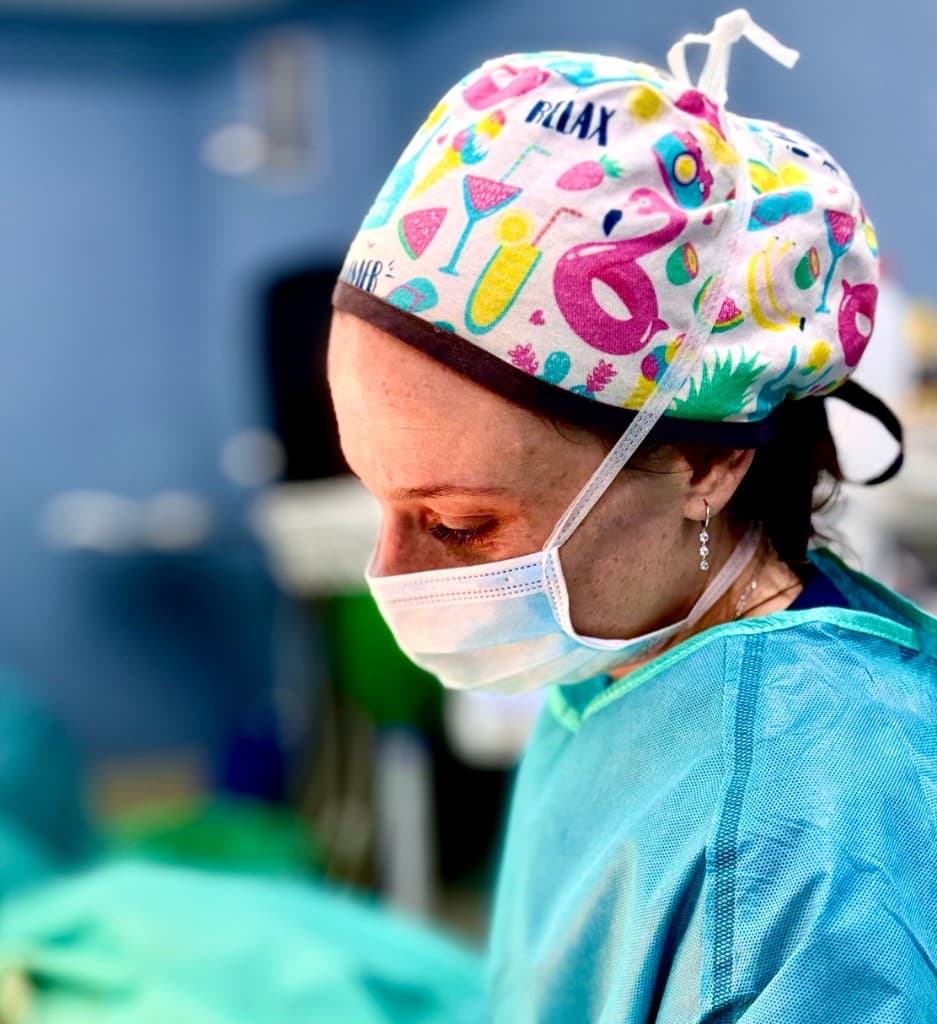
How is the procedure performed?
Dr Manon Belhoste creates the vagina using skin from the penis, turned inside out into a cavity hollowed out between the urinary tract at the front and the rectum at the back. When penile skin is not enough to reach the intended depth, a scrotal skin graft completes the lining; this addition is decided according to anatomy and the amount of tissue available. A bilateral orchidectomy (removal of both testicles) is carried out during the same procedure if it has not already taken place.
Penile skin inversion
Hollows out a cavity between the urinary tract and the rectum, then lines it with the penile skin turned inside out. Part of the glans, kept with its blood vessels and nerves, forms the clitoris, and the urethra is shortened, then repositioned so that you can urinate sitting down.
Scrotal skin graft
Adds a skin graft from the scrotum to the lining of the vagina, to reach the intended depth.
What happens during the procedure and recovery?
Dr Manon Belhoste performs vaginoplasty in Marseille. The clinic where the operation will be carried out is still being discussed. A consultation with the anaesthetist takes place before the procedure.
| Item | Detail |
|---|---|
| Anaesthesia | General anaesthesia. |
| Duration | 3 to 5 hours. |
| Hospital stay | 7 to 10 days. |
| Equipment | Urinary catheter kept in for 7 to 10 days. Stent, a device that keeps the vagina open, is placed at the end of the procedure. The surgical team removes it, often around day 5 to 7. |
| Result | The result changes over several months, while the swelling goes down and the tissues remodel. Depth and width vary with anatomy, available tissue, technique, healing and how regularly dilations are done. Clitoral sensitivity may be reduced or altered at first, then change as the nerves recover. |
| Exertion and activity | Heavy lifting and early exertion should be avoided. Baths and sport are generally resumed after 6 weeks. |
Frequently asked questions
Vaginoplasty creates a vulva and a vagina that allows penetration when depth and healing permit. In return, it requires a regular programme of dilations during healing and in the long term, and exposes you to complications linked to the vaginal canal. Removal of both testicles causes permanent infertility and ends the main natural production of testosterone; removing the penis and the transformation of the genital tissues are irreversible.
Before vaginoplasty, Dr Manon Belhoste and the anaesthetist give instructions on fasting, showering, any shaving and bowel preparation, which must be followed. All medicines, hormone treatments, anticoagulants, antiplatelet drugs and supplements must be reported. Any adjustment of hormone treatment around the procedure is decided case by case, according to clot risk, and it is neither stopped nor restarted without medical instructions. Stopping smoking and all nicotine is required to reduce the risk of poor healing. Permanent hair removal on the scrotum may be useful when scrotal skin must line the canal; depending on the technique, hair roots may also be treated during the procedure. Any infection, fever, urinary problem or genital skin lesion must be reported. Fertility preservation, if wanted, must be completed before the procedure.
Movement resumes after a few days. Loose clothing limits rubbing on the stitches, and Dr Manon Belhoste gives instructions on care, hygiene and dilations. After the testicles are removed, anti-androgens can often be stopped, and the feminising treatment is reviewed with the doctor who prescribes it.
A regular dilation programme is essential to maintain the width and depth of the vagina created, during healing and in the long term. The first session is usually supervised by the team after the stent is removed, around day 5 or 7. Sessions are then daily, for example 3 sessions of 15 to 30 minutes a day for 1 month, then 2 a day until 3 months, then once a day. The size of the dilators increases and the frequency decreases depending on healing. Poor adherence increases the risk of shrinkage, narrowing (stenosis) or loss of depth, and can lead to a second operation.
Vulvoplasty creates a vulva without a deep vaginal canal and without dilations. Vaginoplasty creates a vagina intended for receptive vaginal penetration, once depth and healing allow it.
Perineal physiotherapy is recommended after the operation. It helps with learning how to perform the dilations, relaxing the pelvic floor and supporting functional recovery. It can also start before the operation, to work on the perineal muscles.
Sexual activity will be allowed after sufficient healing, usually around 3 months, with Dr Manon Belhoste's agreement. The skin of the penis and that of the scrotum do not produce lubrication comparable to vaginal mucosa. External lubrication is usually needed during penetrative sex. The prostate is not removed. Medical follow-up of the prostate remains advisable, depending on age, medical history and usual recommendations.
Dr Manon Belhoste
Dr Manon Belhoste is a plastic surgeon, Doctor of Medicine and holder of the European Diploma in Plastic, Reconstructive and Aesthetic Surgery.
Dr Manon Belhoste's background
The practice
Dr Manon Belhoste holds consultations at her practice, 1 Boulevard Lord Duveen, 13008 Marseille, from Monday to Thursday.
Operations take place at the La Phocéanne polyclinic and the Phénicia clinic, in Marseille.
The practice and the clinicsWithout a vaginal canal, the procedure is discussed on the vulvoplasty page. Vulvoplasty
Page updated on 10 October 2026.